
5 Types of Cranes for Industrial and Construction Needs
In today's rapidly evolving landscape of industrial and construction projects, cranes play an essential role in ensuring the efficiency and safety of lifting operations. By selecting the appropriate crane, projects can be executed with higher precision, safety, and cost-effectiveness. From towering skyscrapers in bustling cities to massive infrastructure undertakings in harsh environments, cranes have become indispensable in both traditional and novel construction projects. While the industry continues to innovate, here are five of the most common options for crane rentals to help you make a smart choice for your next project.
1. Tower Cranes
One popular option is tower cranes, which are tall, resilient structures that rise high into the sky, a staple in modern urban skylines. Built from a combination of steel and precision engineering, these cranes are designed to handle extremely heavy loads and heights. Their specific construction consists of a vertical mast and a horizontal jib, which allows for a wide radius of operation. According to Civil Engineering, tower cranes are the number one most widely used crane type in the world for crane rentals, due to their adaptability and efficiency. Their vertical reach and lifting capacity make them ideal for constructing tall buildings and skyscrapers, which is why they are often synonymous with urban development.
Tower cranes are predominantly used in environments where space is limited and height is an advantage. They are commonly seen within city centers, assisting in the development of residential high-rises, commercial office buildings, and industrial complexes. With their extensive reach and lifting abilities, tower cranes are invaluable for moving heavy materials such as steel beams, concrete blocks, and large equipment across significant distances. This capacity for vertical and expansive lifting simplifies logistics on site and accelerates construction progress. Their enhanced efficiency in urban construction underpins their ubiquitous presence in most major city construction projects around the globe.
Each tower crane is engineered with specific capacity constraints designed to handle loads ranging from several tons to hundreds of tons, while their height capabilities stretch up to hundreds of meters. Despite their strengths, tower cranes are limited by weather conditions, as high winds or storms can pose significant safety risks. Positioning and anchoring are crucial for stability, requiring careful planning and engineering.
2. Mobile Cranes
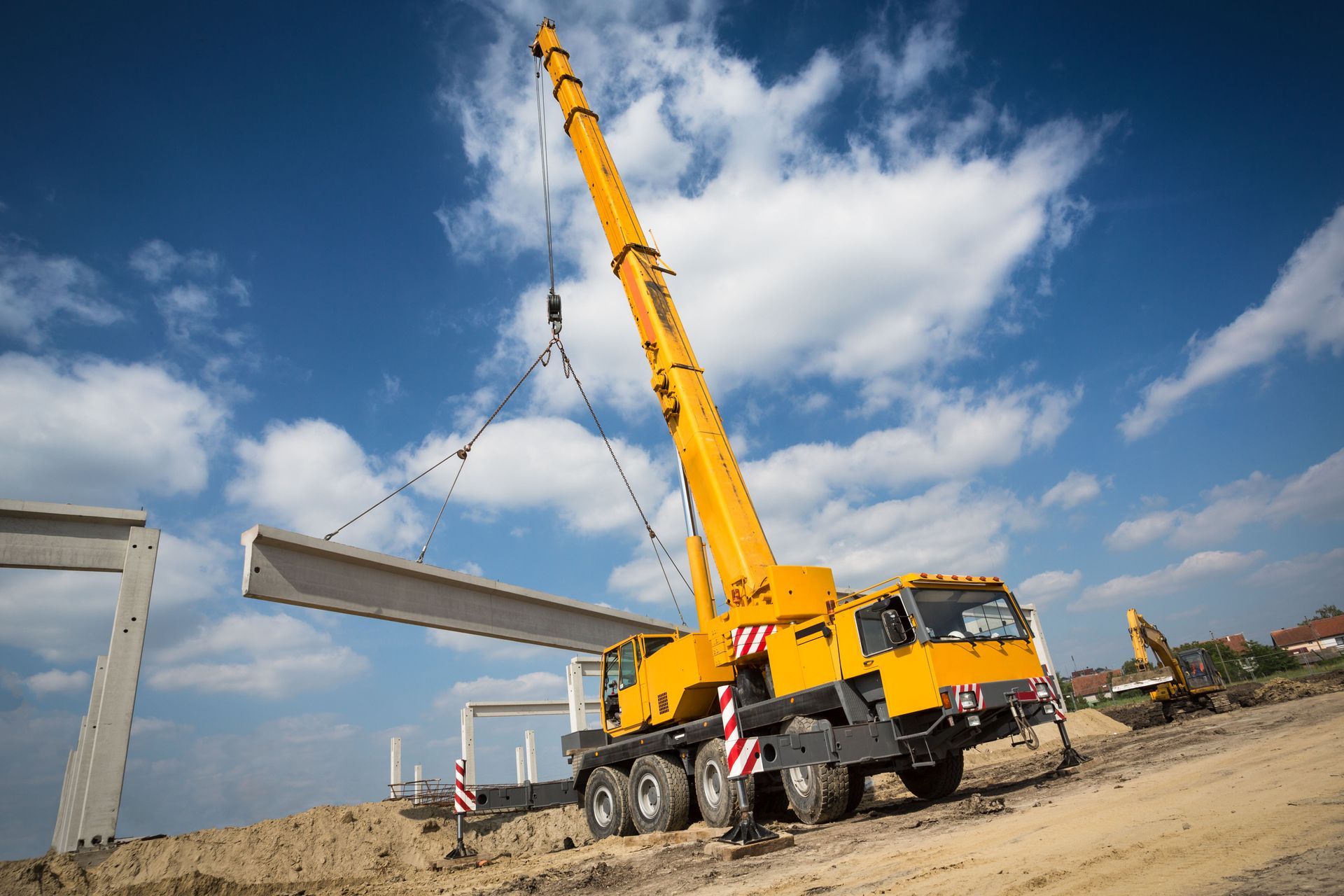
A mobile crane encompasses a broad array of crane types that vary in size, mobility, and lifting capacity, tailored to suit specific lifting needs. They include truck-mounted cranes, all-terrain cranes, and rough terrain cranes, each equipped with unique features to navigate different terrains. Their mobility is enhanced by being mounted on either trucks or wheeled frameworks, allowing them to move easily from one site to another without extensive setup efforts. This adaptability is perfect for crane rentals and projects that require quick deployment and short-term lifting tasks. The diverse range of mobile cranes makes them indispensable tools in industrial and construction applications requiring flexibility.
The strength of mobile cranes lies in their remarkable flexibility and ease of mobility, allowing for versatile applications in various construction scenarios. Mobile cranes are capable of accessing confined job sites and navigating through challenging terrains, adapting swiftly to changes on-site. This flexibility reduces the need to dismantle and reassemble stationary structures, saving time and labor. Additionally, modern advancements in mobile crane technology have increased their lifting capacities, making them competitive with stationary cranes.
The quick setup and tear-down capabilities of mobile cranes make them invaluable in scenarios requiring short-term lifting solutions or quick intervention. Construction companies leverage mobile cranes for tasks such as bridge construction, material relocation, and the support of infrastructure projects. In the energy sector, mobile cranes assist in the maintenance and installation of wind turbines, pipelines, and refineries where rapid response is necessary. Their short-term deployment capability ensures that they can efficiently handle lifting tasks without major disruptions to the project's timeline.
3. Rough Terrain Cranes
Rough terrain cranes are specifically engineered to operate effectively on challenging and uneven landscapes. Equipped with large, heavy-duty tyres and powerful engines, these cranes offer exceptional traction and stability over rugged terrains. Their compact design facilitates maneuvering through confining areas, while the four-wheel steering significantly enhances directional control. These cranes are equipped with robust lifting gear, designed to handle substantial loads under testy conditions. Also, many variants come with stabilizing outriggers, which ensure stability during operations, thus making them fit for a diverse range of construction operations.
Operating in unstable conditions presents unique challenges that rough terrain cranes are adept at mitigating due to their tailored features. In environments like oil fields, infrastructure improvements, and rural development projects, these cranes deliver superior performance by overcoming unstable and soft grounds. They can occupy development projects such as bridge constructions and maintenance, earth-moving tasks, and flood control operations. Their ability to adapt to uneven surfaces without sacrificing lifting capacity sets them aside in the construction crane arsenal.
Various industries rely on these crane rentals and appreciate the benefits they offer like their adaptability to challenging environments and their sturdy performance capacity. Infrastructure development projects, including road construction and bridge installations, leverage these cranes for their mobility and lifting prowess. In the oil and gas industry, rough terrain cranes play an essential role in maintenance, erection, and dismantling tasks. Agriculture and environmental projects also capitalize on their capabilities to manage rural and undeveloped territories efficiently.
4. Crawler Cranes
A crawler crane is a robust machine known for its high weight capacities and ability to navigate various terrains with tracked wheels. Their structural integrity extends from a heavy platform mounted on crawler tracks, offering unrivaled stability and load handling. Equipped with boom configurations that can extend upwards or outwards, these cranes facilitate multiple lifting and rigging operations. The tracks allow them to displace considerable weights without external stabilization during movement, lending strength to challenging construction undertakings.
Crawler cranes are particularly advantageous for crane rentals that involve heavy industrial or infrastructure projects where lifting massive loads is paramount. In projects such as bridge construction, power plant setups, and large-scale industrial complexes, they expedite lifting and placement tasks. These cranes also support renewable energy projects, assisting in the installation of wind turbines or solar fields through precision and heavy-duty capabilities. Their involvement in off-shore constructions, where stability and weight are crucial, underscores their versatility.
The benefits of a crawler crane include exceptional load-bearing capacity and stability over uneven terrain, with minimal preparation needed for setup. Their continuous power flow from the tracks ensures precise maneuverability, making them ideal for tasks demanding high accuracy. While extremely capable, the drawbacks lie in their limited travel speed and maneuverability compared to wheeled cranes. Their size and weight may pose challenges for transportation between job sites, necessitating disassembly and reassembly.
5. Overhead Cranes
When you need to mount something to an upper structure and focus on horizontal movement, an overhead crane is the best option. There are various types: single girder, double girder, and workstation cranes, each offering unique features for specific operational needs. Single girder cranes are efficient for lightweight loads, while double girders handle heavier weights through enhanced structure integrity. Workstation cranes allow intricate maneuverability within smaller, delineated operational zones, facilitating specialized tasks.
In warehousing and manufacturing, overhead cranes streamline operations by managing workflows and moving materials efficiently. They are employed to stack heavier inventory, assist in loading/unloading goods, and facilitate assembly line components, reducing manual handling. In heavy manufacturing sectors, they lift massive or delicate components precisely, ensuring safety and accuracy within complex environments. Their integration reduces labor costs, expedites handling times, and enhances productivity across various manufacturing processes.
If you're interested in professional
crane rentals, American Industrial Contractors is here to help. We offer a wide selection of services from equipment rentals to general contracting and rigging. To learn more about our services or book an appointment, contact us today.
Share On: